


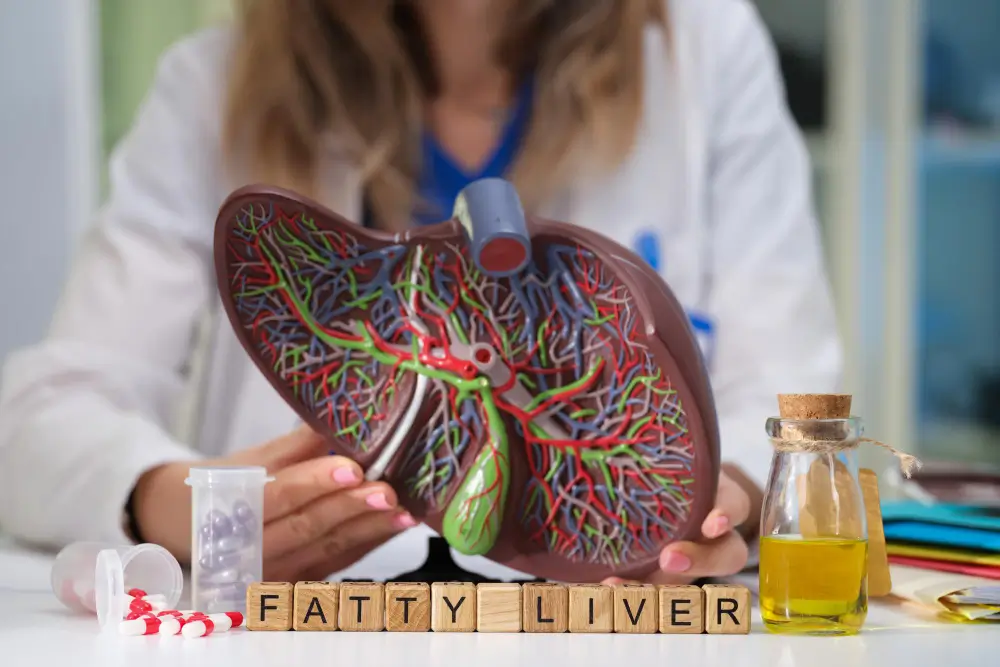
If you’ve been diagnosed with Metabolic Dysfunction-Associated Steatotic Liver Disease (MASLD) or are concerned about your liver health, you’re not alone. MASLD is a surprisingly common condition, affecting an estimated one in every three people in the UK.
The good news? In its early stages, MASLD is often reversible. This definitive guide will walk you through everything you need to know, from its root causes and symptoms to how it’s diagnosed and the essential steps you can take to manage and even reverse the condition.
Table of Contents
Metabolic Dysfunction-Associated Steatotic Liver Disease (MASLD) is the term for a range of conditions caused by a build-up of fat in the liver. It is called “metabolic dysfunction-associated” because it is linked to metabolic conditions such as insulin resistance, obesity, and type 2 diabetes, distinguishing it from alcohol-related liver disease.
A healthy liver should contain little or no fat. When fat makes up more than 5% of your liver’s weight, it is classified as a fatty liver (steatosis).
MASLD exists on a spectrum:
Fibrosis and Cirrhosis: Persistent inflammation leads to scarring (fibrosis). Over time, this can progress to cirrhosis, severe scarring and hardening of the liver that impairs its function. Cirrhosis is irreversible and can lead to liver failure and liver cancer.
Experts do not know the exact cause, but MASLD is strongly linked to metabolic syndrome, a cluster of conditions that increase your risk of heart disease, stroke, and type 2 diabetes.
The primary causes and risk factors for MASLD include:
Rapid Weight Loss and Poor Diet: Diets high in sugar, processed foods, and saturated fats can promote fat storage in the liver.
One of the most challenging aspects of MASLD is that it is often a “silent” disease. In the early stages, most people experience no symptoms at all.
As the condition progresses to more advanced stages (like MASH or cirrhosis), symptoms may include:
If you experience any of these symptoms, it is crucial to consult your GP.
MASLD is often first suspected during routine blood tests or investigations for other conditions. The NHS diagnostic pathway typically involves:
Further Investigations: If advanced scarring (cirrhosis) is suspected, your consultant may recommend a liver biopsy, where a small sample of liver tissue is taken for analysis. This is less common due to the effectiveness of the FibroScan.
There is currently no specific medication licensed to treat MASLD in the UK. The primary and most effective treatment is lifestyle modification.
This is the single most important intervention. The goal is gradual, sustained weight loss.
Aim to lose 5-10% of your body weight. For a person weighing 90kg (14 stone), this means losing 4.5-9kg (10-20 pounds).
Losing just 5% of your body weight can reduce liver fat significantly. Losing 10% can improve inflammation and potentially reverse some fibrosis.
Focus on a Mediterranean-style diet, which is highly recommended by NHS dieticians.
Eat more: Fruits, vegetables, whole grains (oats, brown rice), and lean protein (fish, poultry, pulses).
Choose healthy fats: Found in olive oil, nuts, seeds, and avocados.
Avoid: Sugary drinks, processed foods, refined carbohydrates (white bread, pasta), and excessive saturated fats.
Aim for at least 150 minutes of moderate-intensity exercise per week (e.g., brisk walking, cycling, swimming).
Incorporate strength training (e.g., weight lifting, resistance bands) at least twice a week. Exercise helps improve insulin sensitivity, even without significant weight loss.
Work with your GP to effectively manage:
Yes. In the early stages (simple fatty liver and even early MASH), the damage can often be completely reversed through sustained lifestyle changes, particularly weight loss.
Simple fatty liver is not typically serious on its own. However, if it progresses to MASH and then cirrhosis, it becomes a serious condition that can lead to liver failure. This is why early diagnosis and management are critical.
Yes. The most important items to cut down on are sugary drinks (fizzy drinks, squashes, fruit juices) and highly processed foods (ready meals, sugary snacks, processed meats).
Yes. This is known as “lean MASLD.” People of a normal weight can still have the condition if they have insulin resistance or a genetic predisposition.
MASLD refers to fat buildup in the liver, while MASH (Metabolic Dysfunction-Associated Steatohepatitis) is a more serious form that includes liver inflammation and cell damage, increasing the risk of fibrosis and cirrhosis.
Common causes and risk factors include obesity, insulin resistance, type 2 diabetes, high cholesterol, high triglycerides, metabolic syndrome, PCOS, hypothyroidism, and diets high in sugar and processed foods.
Diagnosis typically involves liver function blood tests, ultrasound scans, FibroScan® assessments, and in some cases, a liver biopsy to evaluate liver damage and scarring.
Yes. In its early stages, MASLD is often reversible through weight loss, a healthy diet, regular exercise, and management of underlying metabolic conditions.
A Mediterranean-style diet rich in fruits, vegetables, whole grains, lean proteins, healthy fats, nuts, seeds, and olive oil is commonly recommended for liver health.
Untreated MASLD can progress to MASH, fibrosis, cirrhosis, liver failure, and may increase the risk of liver cancer and other metabolic complications.
Yes. At least 150 minutes of moderate-intensity exercise per week, along with strength training twice weekly, can improve insulin sensitivity and support liver health.